Why the wet patch is not where the leak is
The usual logic — «the patch is above the kitchen, so the roof leaks above the kitchen» — often fails on a flat roof. A roof is not a single waterproof sheet but a system of layers — the roof build-up — and water that gets inside does not have to drip straight down. It can travel several metres inside the roofing system and show up nowhere near the defect.
Imagine a seam by the parapet has opened, the water has gone into the layers of the roof, and the stain has appeared on a ceiling several metres away from the parapet. Patch only the spot above the stain and the open seam stays exactly where it was.
That is why a patch like that usually treats the symptom, not the cause. The aim of a survey is to find the cause, not the place of the wet patch. The method is chosen to suit the construction and symptoms of the particular roof: there is no universal technique that works equally well on every roof.
How a leak is found: four methods
These are the methods our partner Belov Engineering uses when surveying a roof. They can be combined, depending on the task.
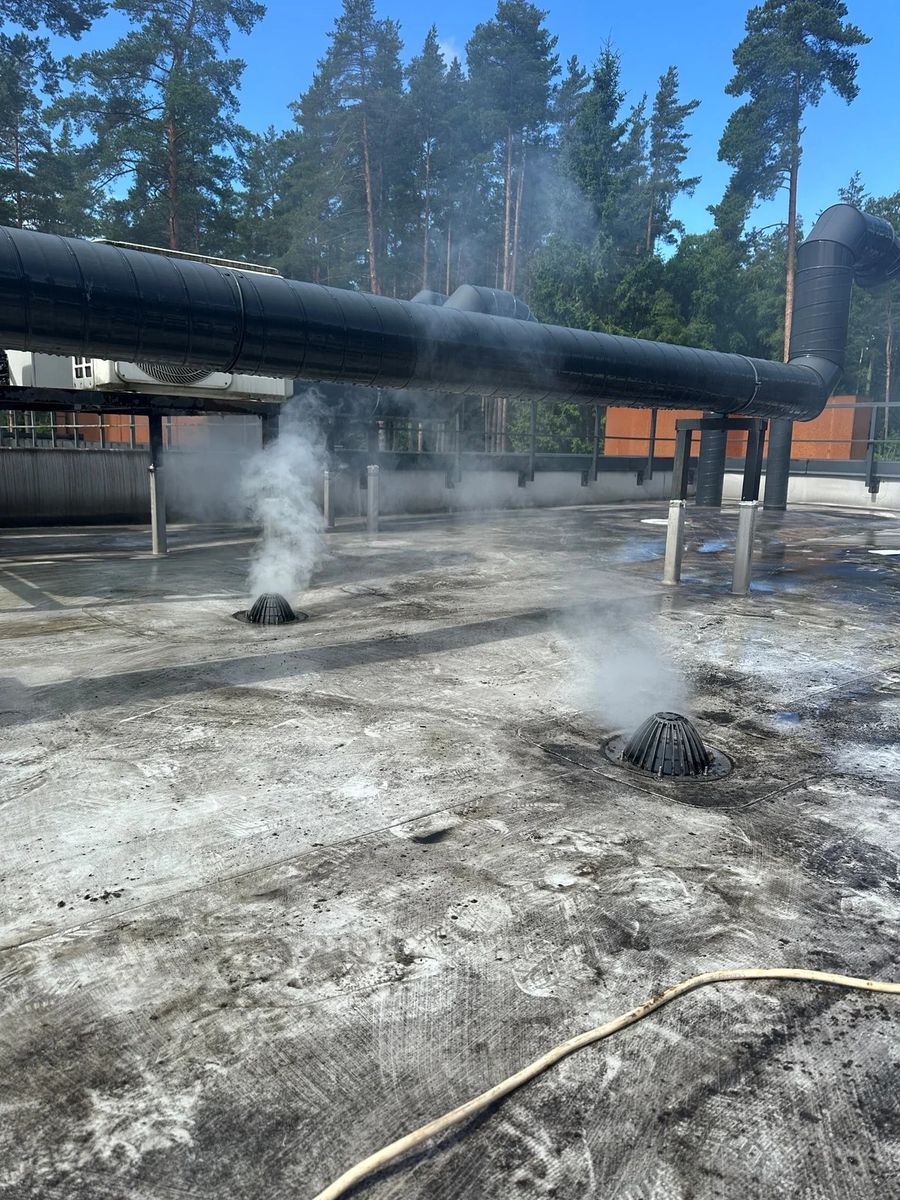
Indicator smoke
The method shows where air escapes and where the roof is not airtight: wherever the air finds a way out, the roofing system is not sealed.
An example from our partner’s practice: a private estate, 976 m². The smoke survey took 4 days and localised the leaking zones — 57 defects were found.
Moisture survey (Tramex)
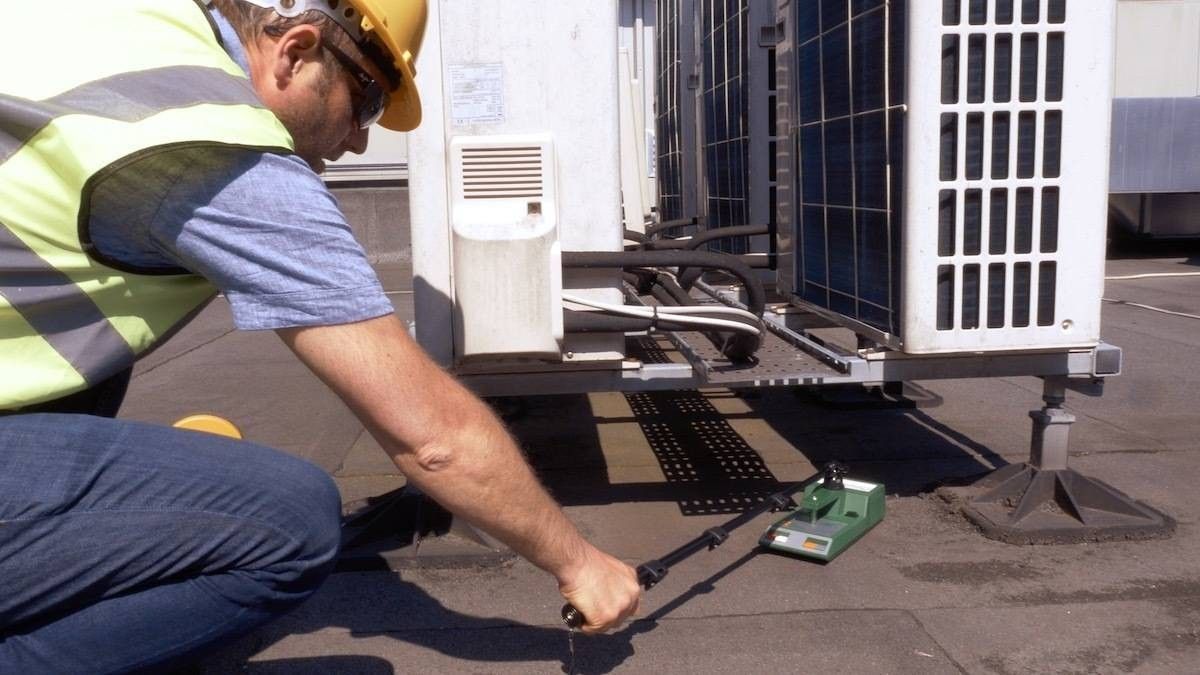
A moisture meter shows the zones of raised moisture inside the roof build-up. It reveals where the layers are actually wet, not just where the stain appeared on the ceiling. That information feeds the next decision: repair, dry or replace.
Checking the welded seams
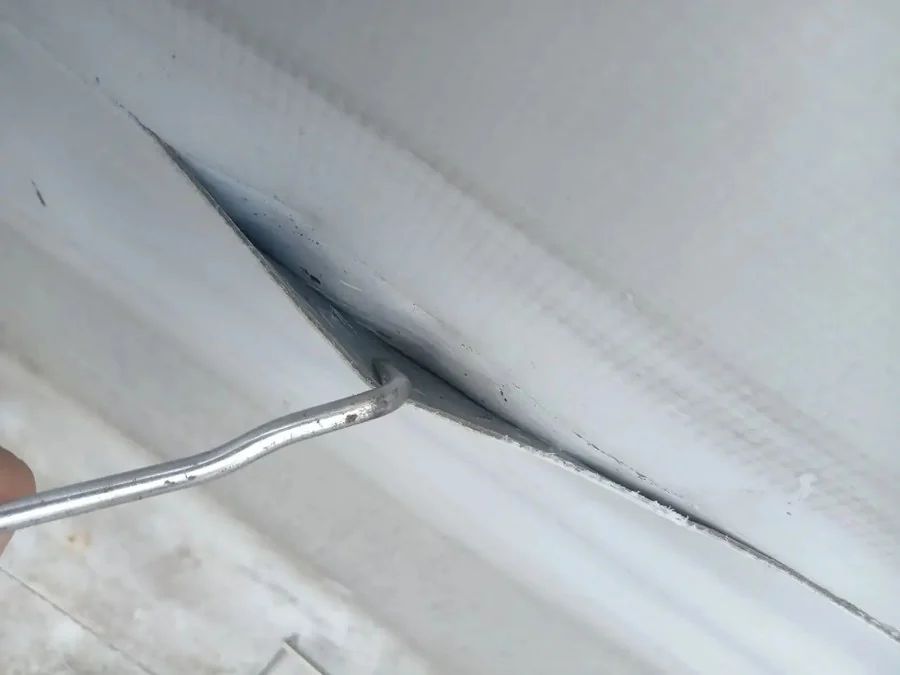
PVC and TPO membranes are both polymer membranes, and their seams are welded with hot air. A seam is checked after installation and again when a roof in service is surveyed: it is the place where the sheets are joined to each other, so it gets its own inspection.
Checking the details
Junctions with other structures, penetrations, parapets and other complex elements are checked separately from the main field of the roof: in these places the membrane changes plane or is crossed by elements that pass through the roof.
What happens after the survey: three scenarios
The decision is made from the survey results, not before it. There are three possible routes.
1. Local repair of seams and details
If the survey shows that the problem sits in individual seams, junctions or penetrations, the work can be limited to them. In that case the whole roof does not need to be replaced.
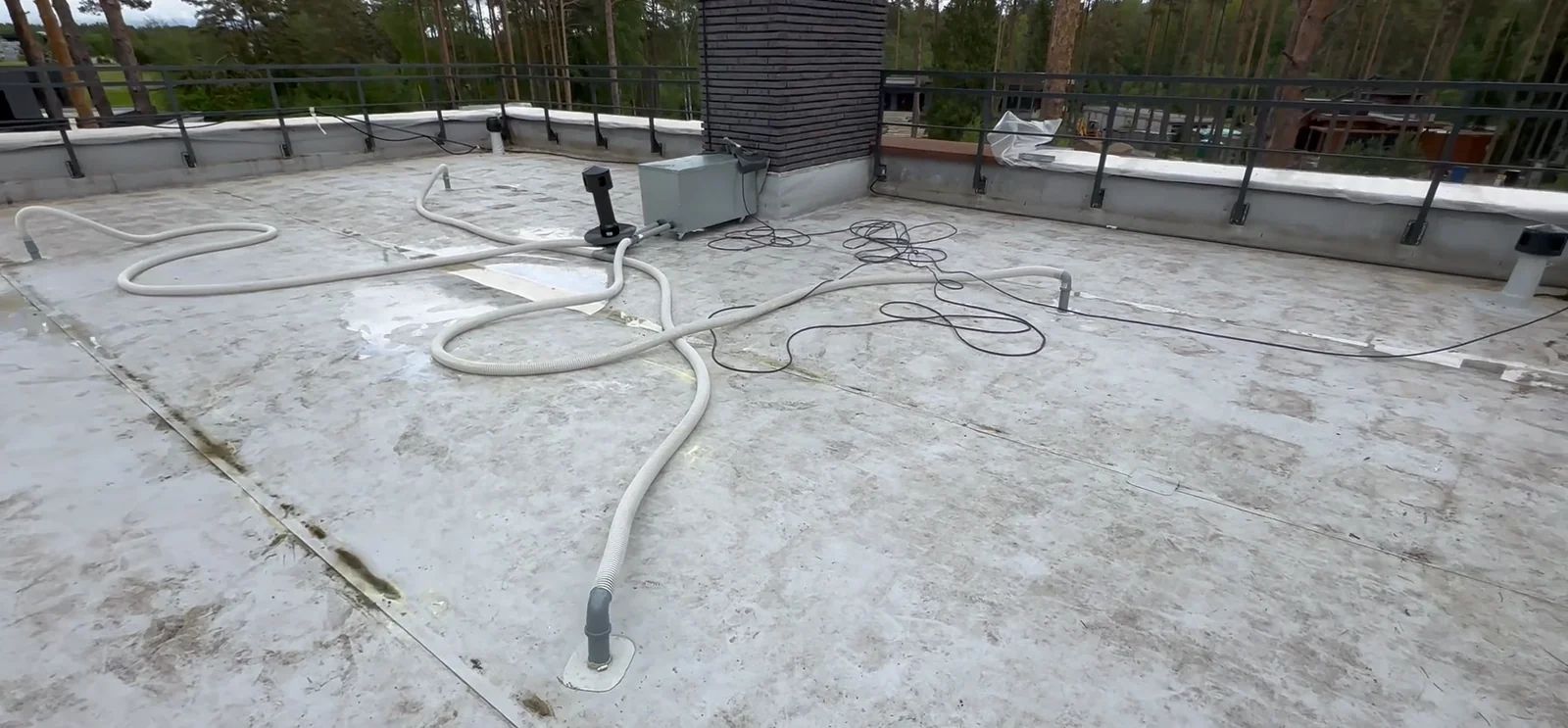
2. Drying the build-up
When the roof build-up has got wet but its layers are still usable, the moisture is removed with professional equipment — which lets the usable layers stay. Drying is done where it is technically justified, and the process is monitored. An example from our partner’s practice: 358 m², 46 days, more than 850 litres of water removed.
3. Major repair
This is full or partial replacement of the roofing system, taking the condition of the existing layers into account. An example from our partner’s practice: an industrial building, 1,224 m², 34 days — demolition and complete reconstruction of the roofing system, with the whole build-up replaced.
Which of the three routes you need will only become clear after the survey — not before.
What a flat roof with a PVC membrane is made of
To understand what is actually being repaired, it helps to know how a roof build-up is put together. The example is an installation on a private house: 374 m², 16 days, a 10-year warranty. It is a roof not intended for heavy use — not for walking on and not for terraces.
- load-bearing reinforced-concrete base;
- bituminous vapour barrier;
- thermal insulation layer;
- slope-forming layer of loose materials;
- base for the waterproofing layer;
- separation layer of geotextile;
- waterproofing of PVC membrane.
The make-up and the details for a particular building are selected for that building, so this list is an example, not a ready recipe for any roof. We also have a separate guide on insulating a flat roof in our BAZA building-materials shop: how to insulate a flat roof.
How quality is controlled
When the membrane is welded, the temperature of the equipment is monitored, along with the temperature and humidity of the outside air. The welding equipment is Swiss-made Leister.
After the works, or at an inspection while the roof is in service, the welded joints are checked, as are the junctions with other structures, the penetrations and other details. Installation is documented with photos and video, and at the end comes acceptance and an inspection report.
There is also a separate service — technical support: independent control of the installation stages, training, survey, and an inspection report. For how independent control of a renovation works in general, see our article on technical supervision.
Who does the work
Flat roofs with us are carried out by our partner, Belov Engineering. Its services:
- Flat roof installation — waterproofing with PVC and TPO membrane: system selection, details, installation and quality control;
- Major repair — full or partial replacement of the roofing system, taking the condition of the existing layers into account;
- Roof survey — visual inspection, indicator smoke, moisture surveys and other methods depending on the task;
- Drying the roofing system — removing moisture from the build-up with professional equipment, when it is technically justified;
- Technical support — independent control of installation stages, training, survey, inspection report.
Belov Engineering’s track record: 10 years of combined experience in roofing and construction; 81,000 m² of roofing installed and replaced on private houses and industrial buildings; more than 4,000 people trained in installing waterproofing and thermal insulation systems.
The company is headed by Leonid Belov. He has a higher education — a bachelor’s and a master’s degree in industrial and civil construction; for 5 years he ran the TechnoNICOL Training Centre, and his combined professional experience in construction is 10 years.
You leave the request with us, at Construction Georgia — after that everything follows the order described below.
How we work
- request and site measurement;
- decision and estimate: system, details, scope, timing;
- contract: responsibility, scope of work, warranty terms;
- purchasing and installation, documented with photos and video;
- acceptance and inspection report;
- two seasonal inspections.
An example of timing for a roof of up to 250 m²:
| Stage | Time |
|---|---|
| Request, site visit and measurement | 1–2 days |
| Choosing the solution and calculating it | 1–2 days |
| Agreeing and signing the contract | 1–2 days |
| Purchasing materials and carrying out the works | 6–10 days |
| Acceptance of the roof and issue of the inspection report | 1 day |
Timing can change depending on the project, how ready the site is, material deliveries and the weather.
A site visit for measurements in Tbilisi and the surrounding area happens within 2 hours; we work across Georgia.
The warranty on the works is up to 10 years. The term, conditions and limits of liability are set in the contract for the chosen system. In addition, during the first two years there is a free seasonal service: 2 inspections, before or after the winter season — we arrange the date with you ourselves.
Free as part of the works:
- help with the project: solutions in PDF / DWG, discussion with the designer;
- selecting materials to fit your budget;
- a daily photo and video report on progress in a messenger;
- a shared chat with the manager and the foreman — available from 8:00 to 20:00.
What to do while you wait for the survey
- Photograph the stains and note when they appear: after rain, during snow melt, or regardless of the weather. These observations help choose the survey method.
- Do not coat the roof above the stain with mastic or sealant: that usually hides the symptom and does not help find the cause.
- If water is getting into the room, protect your belongings and do not use lights or sockets under the leak.
What to send for a preliminary estimate
We prepare a preliminary estimate from 3 hours after receiving all the source data; the time depends on the complexity and completeness of the project. For the calculation we need:
- the address and purpose of the building;
- the area, a plan and photographs;
- the make-up and condition of the roof;
- the required scope and list of works;
- access, logistics and timing.
Frequently asked questions
Can a leak be found without opening up the roof?
In many cases, yes: to find the cause we use indicator smoke, a moisture survey, and checks of the welded seams and details. Which methods are needed depends on the construction and symptoms of your roof, so we do not promise in advance that nothing will have to be opened up.
Do I have to replace the whole roof if it leaks?
No. After the survey there are several possible decisions: repairing seams and details, drying a wet roof build-up (if that is technically justified and the layers are still usable), or full or partial replacement of the roofing system. Which one you need is decided by the survey results.
What warranty does a flat roof come with?
Up to 10 years on the works. The term, conditions and limits of liability are set in the contract for the chosen system. In addition, during the first two years there are 2 free seasonal inspections, before or after the winter season.
How much does flat roof repair or installation cost?
The cost is calculated for the specific roof: it depends on the area, the make-up and condition of the roof, the details and the scope of work. We prepare a preliminary estimate from 3 hours after receiving all the source data; the time depends on the complexity and completeness of the project.
Do you work outside Tbilisi?
Yes, we work across Georgia. A site visit for measurements in Tbilisi and the surrounding area happens within 2 hours.
Is your roof leaking, or do you need a new one?
Send us photos or the project drawings and we will prepare a preliminary estimate. It takes from 3 hours once we have all the source data.
Send a request →